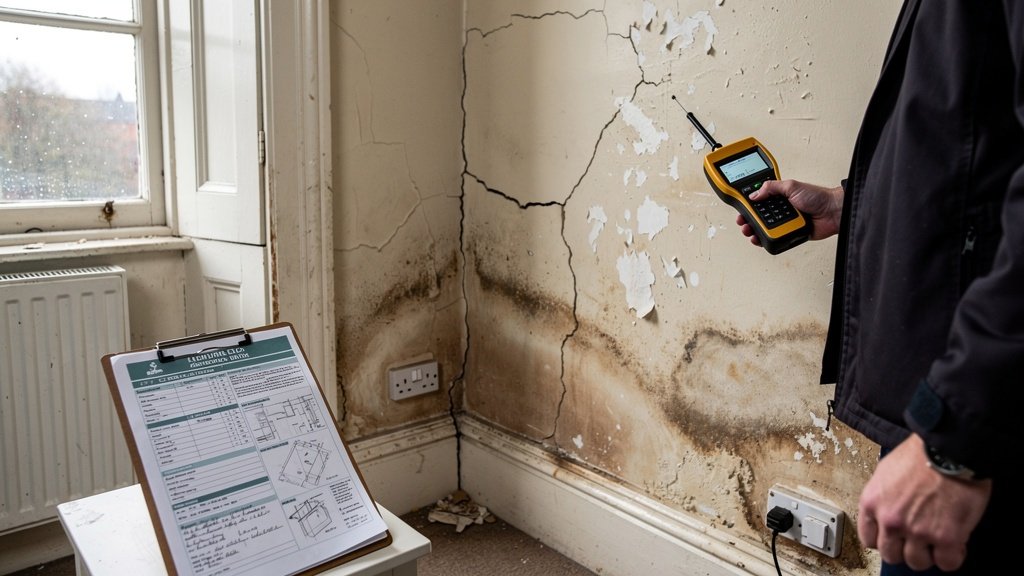
Your building survey has just come back, and it's flagged some issues. Maybe a couple of amber items — some damp, some roof work needed. Maybe something more serious — structural cracking, failed drainage, significant timber decay. Your first instinct might be to panic. But here's the thing: a survey that reveals defects isn't a disaster. It's information. And information is power.
Here's how to use your building survey report to renegotiate the purchase price — calmly, professionally, and effectively.
First: Read the Report Carefully
Before you do anything else, read the full survey report. Not just the summary — the full commentary for each item. A Condition 3 rating (red) might sound alarming, but the commentary might explain that it's a relatively straightforward fix with a known cost. Conversely, a Condition 2 (amber) item might hide within its commentary an issue that has much wider implications.
If you're unsure what something means — call us. We always encourage clients to get in touch after they've read their report. We'd rather spend 20 minutes explaining our findings than have you misunderstand what you're dealing with.
Prioritise the Issues
Once you understand the findings, separate them into three categories:
- Urgent / significant: Issues that need immediate attention or represent a major cost — structural defects, failed drainage, significant roof issues, active timber decay, major damp.
- Near-term maintenance: Items that will need attention in the next 2–5 years — roof maintenance, external redecoration, minor damp, gutter replacement.
- Routine maintenance: Normal wear and tear that any property owner would expect to address over time.
Your renegotiation should focus on categories one and two. Routine maintenance items are part of property ownership and generally won't support a price reduction.
Get Independent Quotes
For significant issues, try to get at least one — ideally two or three — independent contractor quotes before approaching the seller. Our survey reports include guidance on the type of specialist and approximate cost range for recommended works, which gives you a starting point. But independent quotes from local contractors will give you solid evidence to put in front of the seller.
How to Approach the Renegotiation
The key here is to be factual, not emotional. You're not telling the seller their property is falling down. You're presenting documented evidence of genuine issues that affect the property's value, and asking for a price adjustment that reflects the cost of addressing them.
Communicate through your solicitor or estate agent, in writing. Include:
- Reference to the specific survey findings (with section references where possible)
- Contractor quotes or survey-based cost estimates
- A clear, specific reduction request
- A reasonable timeframe for a response
What Can You Reasonably Ask For?
The general principle is that the reduction you're asking for should be directly related to the cost of remedying the defects identified. So if the survey has identified £10,000 of genuine necessary repairs, asking for a £7,000–£8,000 reduction is reasonable. Asking for £25,000 because the surveyor also mentioned the bathroom was dated is not.
In my experience with the Crawley property market, sellers are generally more open to renegotiation than buyers expect — particularly for factual, costed defects. The alternative for the seller is to go back to market, pay continuing mortgage costs, and face the same issues being raised by the next buyer's surveyor.
Price Reduction vs Remediation
Sometimes a price reduction isn't the seller's preferred approach. An alternative is to ask them to carry out specific remedial works before exchange of contracts. This can work well for straightforward issues like damp-proofing or roof repairs, but requires careful management — you need to be confident the works are done properly, not just cosmetically. If the seller does undertake works, request that they use a qualified contractor and provide warranties or guarantees for the works done.
When to Walk Away
Sometimes a survey reveals issues so fundamental that walking away is the right call — not because the property isn't worth having, but because the seller won't negotiate to reflect the genuine cost of repairs. If you're in this position, our surveyors can help you think through whether the issues are resolvable at a sensible cost, or whether the risks genuinely outweigh the benefits of this particular property.
"A building survey that reveals defects isn't bad news — it's good information. And good information is exactly what you need to make the most important financial decision of your life."