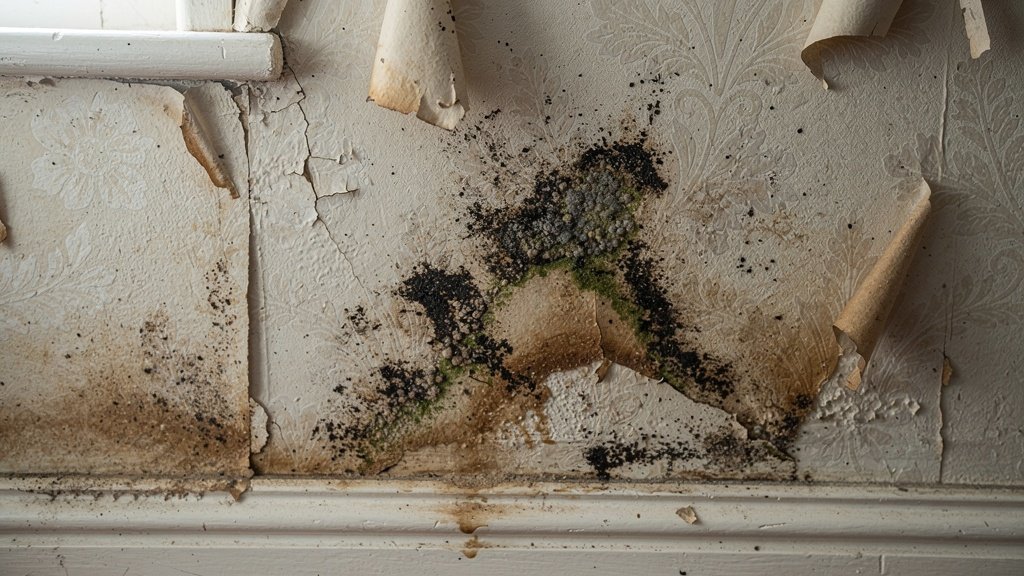
In more than 20 years of surveying properties across West Sussex and Surrey, damp is — without question — the most common defect I encounter. It's also the most misdiagnosed, most misunderstood, and most frequently mistreated condition in residential property. I've seen buyers walk away from perfectly manageable properties in panic over damp reports. I've also seen buyers completely ignore damp issues that were genuinely serious.
The key to making good decisions about damp is understanding what type you're dealing with, what's causing it, and what it actually costs to fix. This guide covers all three.
The Three Main Types of Damp
Most damp in residential properties falls into one of three categories. They have different causes, different appearances, different locations within the building, and different remedies. Getting the diagnosis right first is everything.
1. Rising Damp
Rising damp occurs when moisture from the ground travels upwards through masonry walls by capillary action — essentially, the tiny pores in brick and mortar act like miniature tubes, drawing water upward. It is always found at low level, typically affecting the lower 0.5–1.2 metres of an external or internal wall.
Classic signs of rising damp:
- A "tide mark" — a horizontal line of discolouration on the wall surface, typically at or below 1 metre from floor level
- White salt deposits (efflorescence) on the wall surface — these are hygroscopic salts left behind as moisture evaporates
- Peeling wallpaper or paint at low level
- Plaster that is soft, blown or crumbling in the lower section of walls
- A distinctive musty smell, particularly in rooms with poor ventilation
Causes and context: Rising damp is most common in older properties — particularly pre-1930 buildings that were either built without a damp-proof course (DPC) or with a slate DPC that has now cracked, bridged or otherwise failed. In West Sussex, we see significant amounts of rising damp in the Victorian and Edwardian housing stock in towns like Horsham, Haywards Heath, and in the older areas of Crawley such as Three Bridges and Ifield.
It's important to note that true rising damp is sometimes over-diagnosed by damp-proofing contractors who have a financial interest in recommending treatment. High moisture readings in walls can have other causes — condensation, penetrating damp, or even residual salts from historic dampness that has since been resolved. A good surveyor will distinguish between these and won't recommend invasive treatment unless it's genuinely justified.
Treatment options: The traditional remedy is injection of a chemical damp-proof course — drilling a series of holes along the base of the affected wall and injecting a water-repellent chemical that creates a horizontal barrier against rising moisture. This is typically followed by hacking off and re-applying the affected plaster using a salt-retardant render. Costs for a standard treatment of a three-bed semi in West Sussex typically range from £800 to £2,500 depending on the extent of the works and the specification of the replastering.
2. Penetrating Damp
Penetrating damp enters the building horizontally through defects in the external fabric of the building. Unlike rising damp, it can appear anywhere on a wall — not just at low level — and its location gives you the first clue about the source.
Classic signs of penetrating damp:
- Damp patches on walls or ceilings that are clearly localised rather than uniform across the lower wall
- Staining that correlates with rainfall — appears after wet weather and may dry out in dry spells
- Damp appearing below a window, parapet, chimney breast, or valley gutter
- Internal damp patches at upper floor level, often linked to roof or parapet defects
Common causes in West Sussex properties:
- Failed external pointing: The mortar joints between brickwork deteriorate over time and require periodic repointing. Eroded or open joints allow rainwater to penetrate the wall, particularly in exposed elevations. This is one of the most common causes of penetrating damp we see in West Sussex properties.
- Cracked or defective render: Many properties have external cement render that cracks over time. Once cracked, it actually traps water behind it rather than shedding it, making the problem worse.
- Blocked or overflowing gutters: Blocked gutters that overflow down the face of a wall are a frequent cause of penetrating damp to upper sections of external walls. This is particularly common in autumn when leaf debris blocks gutters.
- Failed window or door seals: Deteriorated sealant or beads around window and door frames can allow water to track into the reveal.
- Defective flashings: Lead or mortar flashings at roof-to-wall junctions, around chimney stacks, and at parapet walls can fail over time, allowing water to track down internal wall faces.
Treatment: Penetrating damp is usually straightforwardly resolved once the source is identified and addressed. Repoint defective brickwork, replace failed render, clear and repair gutters, reseal windows — the external repair is typically the cure. Internal replastering may be needed where salts have deposited in the plaster, but this should only follow the external repair, not precede it.
3. Condensation
Condensation is the most common form of dampness in modern and well-maintained older properties, yet it's frequently confused with rising or penetrating damp. It occurs when warm, moisture-laden air meets a cool surface and the water vapour condenses into liquid water.
Signs of condensation damp:
- Black mould growth, often in corners of rooms, around window reveals, and in cupboards on external walls
- Condensation on windows and cold surfaces
- Mould that appears consistently on internal surfaces regardless of weather conditions
- Typically affects north-facing rooms, rooms with poor ventilation, and areas with thermal bridges
Causes: Modern living generates significant amounts of moisture — cooking, showering, breathing and even houseplants contribute moisture to indoor air. In a well-ventilated, well-insulated building this moisture is managed effectively. In a poorly ventilated, poorly insulated, or overcrowded building it accumulates and condenses on cold surfaces. Condensation is a ventilation and insulation problem, not a structural one.
Treatment: Improved ventilation (extractor fans, trickle vents, whole-house ventilation systems), improved insulation at cold bridges, and changes in occupant behaviour (opening windows, using extractor fans when cooking and showering) are the primary remedies. Condensation does not typically require invasive damp-proofing works.
How to Spot Damp at a Property Viewing
You don't need specialist equipment to spot many signs of damp at a viewing. Here's what I look for when I walk around a property — as a buyer, you can do the same:
- Look at the base of external walls — inside and out. Any discolouration, tide marks or bubbling paint at low level?
- Check under windows — both inside and on the external sill. Failed sills and seals are common sources of penetrating damp.
- Open cupboards on external walls — particularly in bedrooms and bathrooms. Mould in cupboards is often a sign of condensation or penetrating damp that the main room is concealing.
- Look at ceiling corners — particularly below bathrooms or in rooms beneath the roof. Staining or peeling paint at ceiling level can indicate roof or bathroom leaks.
- Check the chimney breast — if there's a redundant chimney, damp at chimney breast level is common if the chimney has been capped without adequate ventilation.
- Trust your nose — a persistent musty smell, even if there's no visible damp, warrants investigation.
Beware of Fresh Decoration
One pattern I see regularly — and which warrants particular attention — is properties that have been very recently decorated in specific areas. A freshly painted chimney breast in an otherwise older-decorated room, or new plaster in a corner of a ground-floor room, can sometimes be masking damp that has been cosmetically addressed without treating the underlying cause.
This isn't to say that all fresh decoration is suspicious — obviously, sellers redecorate before selling. But if the decoration is very localised, or if there's a noticeable difference in surface texture between freshly plastered and original areas, mention it specifically when briefing your surveyor. We can test moisture levels in these areas even where the surface has been recently worked on.
What Happens When a Survey Identifies Damp
If our survey identifies damp — whether rising, penetrating or condensation — we'll clearly document what we found, where it was, our assessment of the likely cause, what we recommend in terms of further investigation or remediation, and an indicative cost range for the works required.
It's important to understand that a damp finding in a survey report does not automatically mean you should not buy the property. Damp is extremely common in older properties across West Sussex, and in the vast majority of cases it is manageable and fixable. The key questions are:
- Is it rising damp, penetrating damp, or condensation — and has the source been correctly identified?
- What will it cost to properly fix?
- Has it caused secondary damage — to timbers, plaster, or other building elements — that adds to the repair cost?
- Is there evidence of historic treatment that has been ineffective or only cosmetic?
Armed with clear answers to these questions from your survey report, you're in a strong position to decide whether to proceed, renegotiate, or request remediation before exchange.
A Word on the Damp-Proofing Industry
I want to address something that comes up regularly with clients. The damp-proofing and remediation industry is not uniformly well-regulated, and there is a well-documented tendency within parts of the industry to over-diagnose damp problems and recommend more extensive (and expensive) treatment than is actually necessary.
If a damp-proofing contractor — as opposed to an independent, RICS-regulated surveyor — tells you that a property has "rising damp" and recommends a full injection DPC and replastering programme, always get a second opinion from an independent surveyor before proceeding. High moisture readings from a damp meter alone are not sufficient evidence of rising damp — they can also reflect residual salts, penetrating damp, or condensation.
An independent building surveyor has no financial interest in recommending any particular treatment. Our job is to correctly diagnose what's present and recommend the most appropriate, proportionate response.
"Damp is one of the most common findings in West Sussex properties — and one of the most manageable if correctly diagnosed and properly treated. Don't let the word 'damp' in a survey report derail a good purchase without understanding exactly what you're dealing with."
If you're concerned about damp in a property you're considering purchasing in Crawley or across West Sussex, contact our team for specialist advice. Our surveyors have extensive experience identifying and interpreting damp in all types of properties across the region.
Frequently Asked Questions
It depends on the severity and type of damp. Condensation or minor penetrating damp is unlikely to affect a mortgage application. Significant rising damp or evidence of structural dampness may cause a mortgage lender to require that the damp is treated before releasing funds. Your mortgage lender's valuer will flag serious damp issues, and some lenders may withhold a retention (a portion of the mortgage funds held back until treatment is completed). Speak to your mortgage broker about the implications if significant damp is identified in your survey.
Not necessarily. Damp is very common in older properties, and the majority of damp issues are treatable at a proportionate cost. The question is whether the cost of treatment is reflected in the asking price, and whether the damp has caused secondary damage (to timbers, plasterwork, etc.) that adds significantly to the remediation programme. Use your survey report findings to have an informed price negotiation, rather than walking away from a property you otherwise want.
You can spot many of the visual signs of damp at a viewing — tide marks, mould, staining, peeling paint and musty smells are all things a non-specialist can observe. Inexpensive moisture meters are available, but they should be interpreted with caution — high readings don't always mean damp in the clinical sense, and experienced surveyors use them as one tool among many rather than as a definitive diagnosis. Your surveyor will have professional-grade equipment and the training to interpret what it's finding.
Costs vary widely depending on type and extent. As a rough guide: a chemical DPC injection and replastering to a 3-bed semi typically costs £800–£2,500. External repointing to resolve penetrating damp on a full house typically costs £2,000–£5,000+. Gutter clearance and repair is typically £200–£600. Improving ventilation (fitting extractor fans, trickle vents) to address condensation typically costs £300–£800. These are indicative ranges — your survey report will give you more specific guidance based on the actual findings.